Hebburn in World War Two
A shipbuilding town on the front line: how Hebburn's Hawthorn Leslie yard built warships for the war effort, and how the bombers came for the Tyne in return.
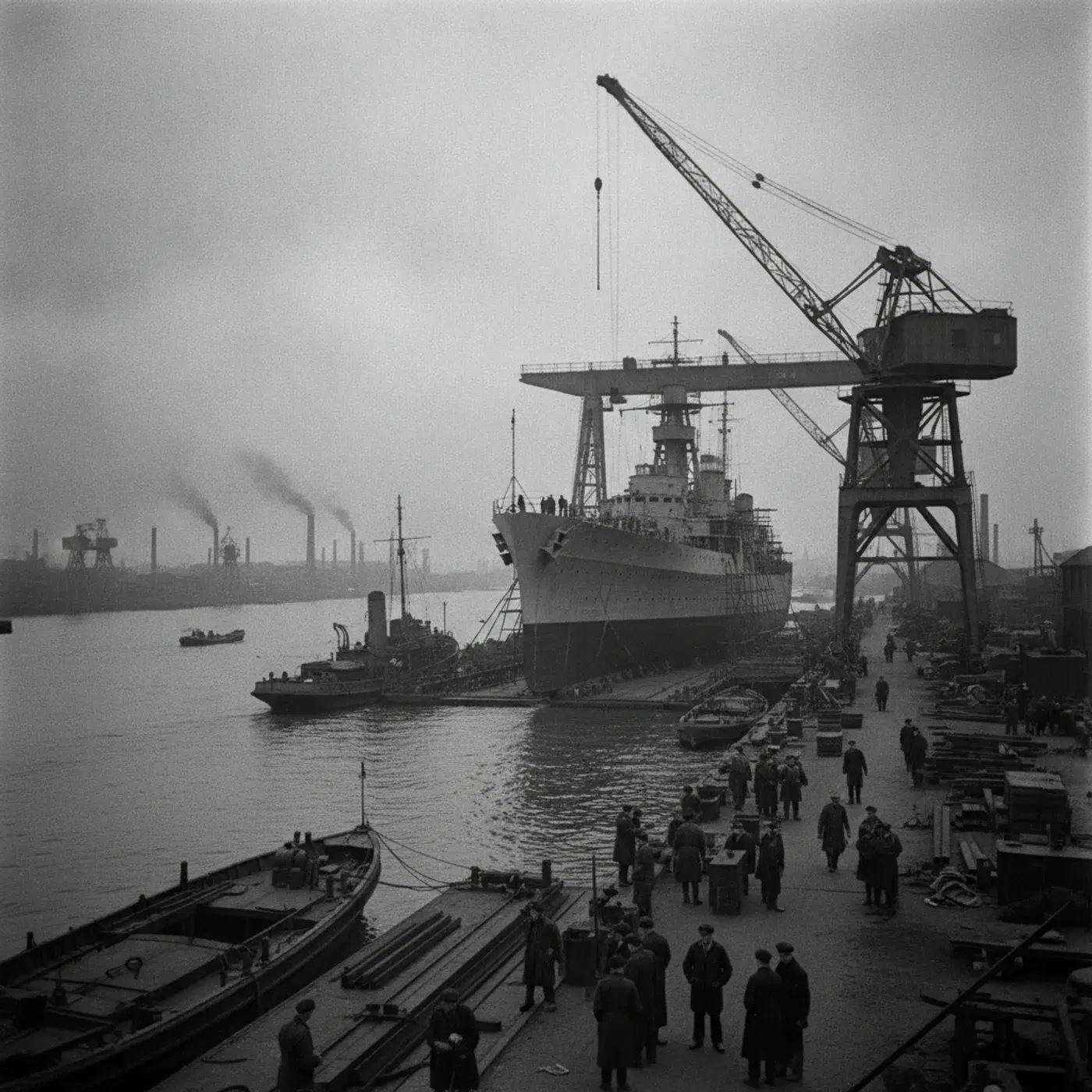
In the Second World War, a shipbuilding town like Hebburn was both a vital part of the war effort and a target because of it. Its yards turned out warships for the Royal Navy, and in return the bombers came for the Tyne. This is the story of Hebburn in World War Two, a chapter that still shapes how the town remembers itself.
Building the ships
Hebburn's Hawthorn Leslie yard, established on the Tyne in 1853, was a major builder of both warships and merchant vessels through the war years. Its most famous product, HMS Kelly, was launched in 1938 and commanded by Lord Mountbatten, and the yard continued to build for the Navy throughout the conflict, work that carried on into the aircraft carrier Triumph in 1946. Hebburn's shipyard workers, like those all along the river, were central to keeping the fleet supplied.
The Mountbatten Shopping Centre in the middle of town, named after HMS Kelly's captain, keeps that wartime connection alive today; you can read more in our guide to Hebburn's shipbuilding and mining heritage.
The bombs fall on the Tyne
Being a shipbuilding town on the river came at a cost. Throughout the war the industrial riverside of Tyneside was raided repeatedly, with shipyards, factories, collieries and the tightly-packed streets of the workers who manned them all in the firing line. Hebburn did not escape. An air raid on the night of 24 to 25 August left two people dead, and on 21 October 1941 the town suffered one of its worst raids, bringing death and destruction to the streets around the yards.
HMS Kelly herself, the pride of the Hebburn yards, was badly damaged during the war before finally being sunk in action off Crete in 1941, with heavy loss of life. The men lost with her are remembered at Hebburn Cemetery.
Remembering the war
Hebburn's wartime story is written into its landscape. The war memorial in Carr-Ellison Park stands in memory of the town's fallen, and the HMS Kelly memorials at Hebburn Cemetery, raised by the ship's survivors and the workers who built her, keep the connection between the town and its most famous vessel. Taken together, they are a reminder that in a shipbuilding town the home front and the front line were never far apart.
Frequently asked questions
Was Hebburn bombed in World War Two? Yes. As a shipbuilding town on the Tyne, Hebburn was a target for air raids. A raid on the night of 24 to 25 August left two dead, and the town suffered one of its worst raids on 21 October 1941.
What did Hebburn's shipyard build in the war? Hebburn's Hawthorn Leslie yard built warships and merchant vessels for the war effort, most famously HMS Kelly, launched in 1938 and commanded by Lord Mountbatten, and later the aircraft carrier Triumph in 1946.
Where is Hebburn's war memorial? The town's war memorial stands in Carr-Ellison Park. There are also memorials to HMS Kelly at Hebburn Cemetery, raised by the ship's survivors and the shipyard workers who built her.
Know more about Hebburn's wartime history? Get in touch.
Never miss what’s on
Join the weekly Hebburn.live digest — the best events, news and local tips, straight to your inbox. Free, one email a week.
What's On
Arts and Craft Club at Hebburn Central Library
4:30 PM · Hebburn Central Library, Glen Street, Hebburn, NE31 1AB
Hebburn Town v Scarborough Athletic
7:45 PM · The Trustmark Group Stadium, 16 South Drive, Hebburn, NE31 1UN
Hebburn Town v Harborough Town
3:00 PM · The Trustmark Group Stadium, 16 South Drive, Hebburn, NE31 1UN